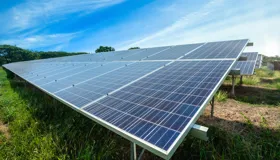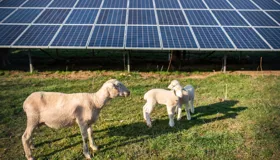
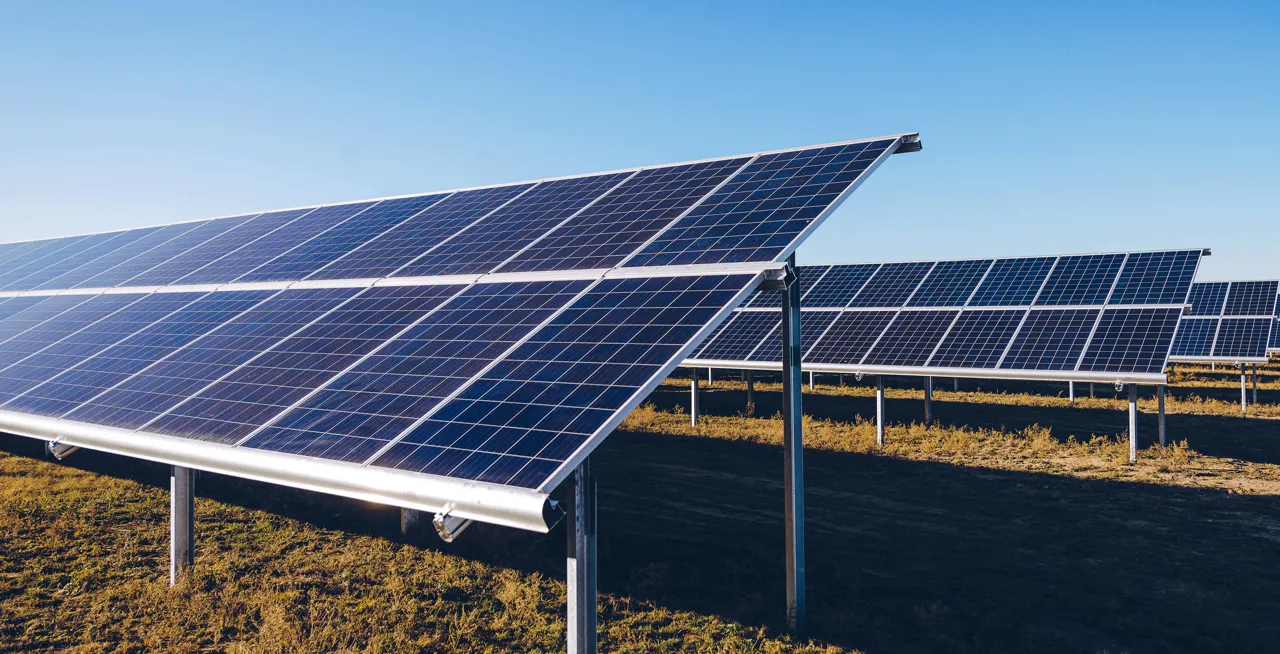
Two solar farms in regional NSW – Gunnedah and Suntop – feature bifacial solar panels that can significantly increase generation capacity by creating energy from solar irradiation reflected off the ground to the underside of the panels.
$74.4m
CEFC debt finance
980,000
bifacial solar panels
Innovative
technology
These new solar farms showcase the performance of innovative first generation bifacial panels. Innovative developments like this have underpinned the rapid growth of solar energy in Australia, allowing us to capture even greater benefits from our world leading solar capacity.Monique MillerExecutive Director, CEFC
Our investment
The CEFC committed $74.4 million in debt finance in 2020 to Canadian Solar as part of a syndicate of lenders. The finance delivered major new investment into NSW renewable energy and showcased the next wave of innovation in solar technology.
The finance supported the development of two solar farms, Suntop and Gunnedah, which both used bifacial solar panels to support increased generation capacity.
Canadian Solar sold Suntop and Gunnedah to Cal Energy Resources (Australia) Limited, a subsidiary of Northern Powergrid Holdings Company, in July 2022.1
The CEFC finance was repaid in December 2025.
1. Canadian Solar, News release, July 2022
our impact
Canadian Solar Australia developed Gunnedah Solar Farm and Suntop Solar Farms in New South Wales using almost 980,000 bifacial solar panels.
Both the 110 MW (AC)/ 154 MW (DC) Gunnedah Solar Farm and the 150 MW (AC)/ 189 MW (DC) Suntop Solar Farm west of Wellington, were generating to the grid by August 2022.
Bifacial solar panels can increase generation capacity significantly for the same project size compared with traditional single-sided panels, reducing the levelised cost of energy for utility solar.
Together the solar farms were estimated to avoid more than 350,000 tonnes of carbon emissions in their first year of operations, and generated enough electricity to power an estimated 100,000 homes.