
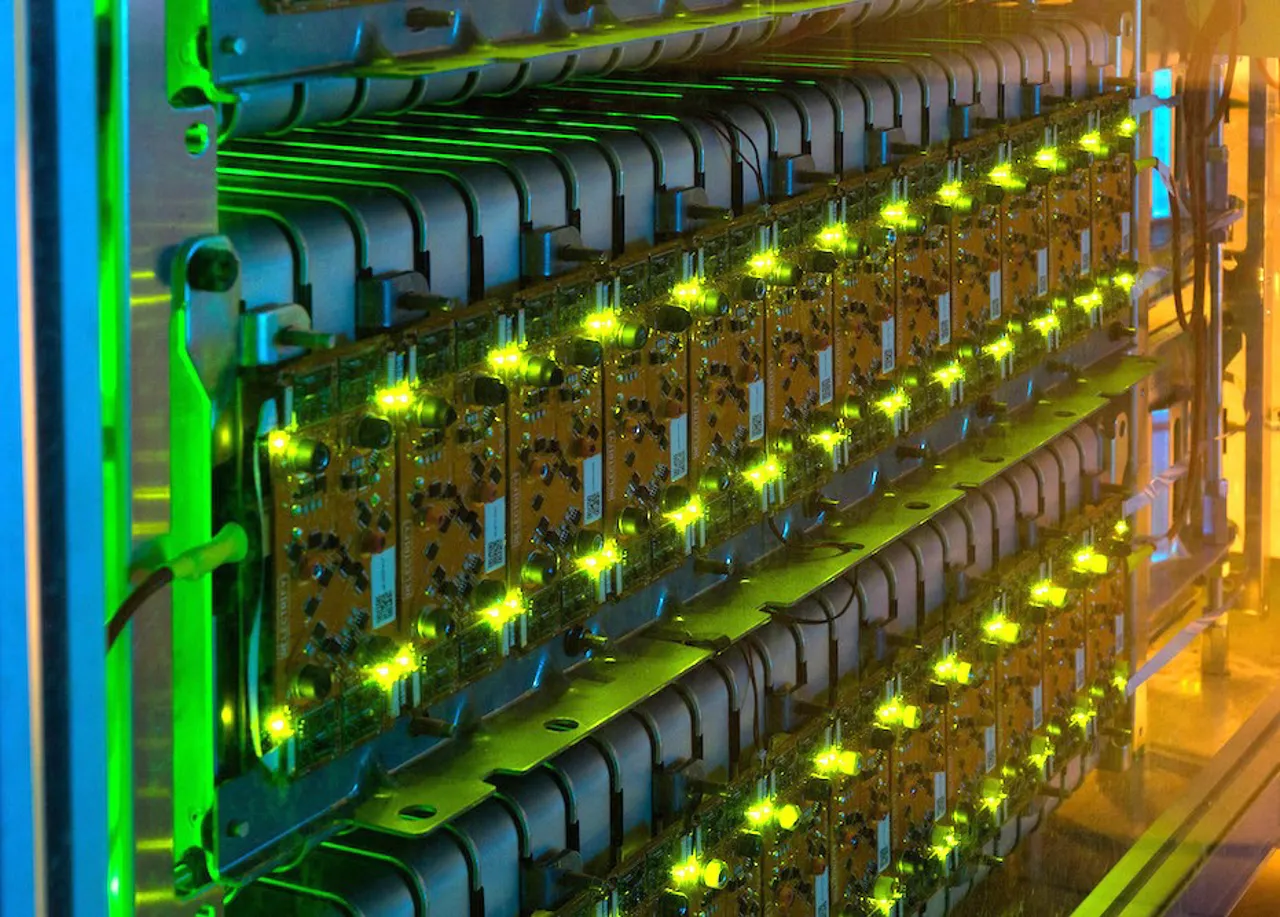
Relectrify technology transforms battery storage performance
World-leaders in cell-level battery control
Relectrify has developed breakthrough technology in battery control. Its Australian-designed ACI Battery Energy Storage System (BESS) delivers 20 per cent more lifetime energy than conventional systems. The technology can be used by commercial and industrial energy users as well as utility-scale asset owners.
$9m
CEFC investment
World-class
battery management tech
20%
more lifetime energy
The AC1 does things no other BESS can do, generating grid-compliant AC power directly from battery cells, without the need for a separate inverter. This all translates into enhanced safety, reliability and investment returns for BESS owners.Jeff RenaudCEO, Relectrify
Our investment
The CEFC has invested $9 million in world-leading Melbourne-based technology company Relectrify to support the development of technologies that are achieving game-changing performance improvements for battery storage systems.
Relectrify, which was founded in 2015, develops and supplies advanced energy control solutions that increase battery cycle life and reduce energy storage costs. The CEFC first invested in Relectrify in 2017, increasing its commitment over time to support the company’s continued development. Climate tech specialist fund manager Virescent Ventures manages the investment on behalf of the CEFC.
Early projects focused on using CellSwitch technology to provide a second life for lithium-ion electric vehicle battery systems so they could be repurposed widely, including for household systems and grid-scale storage. Relectrify has since continued to hone its battery management technology to provide advanced energy control solutions that increase battery cycle life and reduce energy storage costs.
Relectrify investors include At One Ventures, Toyota Ventures, Energy Innovation Capital, GS Future, Creative Ventures and NOAB Ventures. Relectrify solutions have attracted interest from global storage manufacturers including 4R Energy Japan, power utilities American Electric Power and Vector NZ and automotive companies including VW Group Germany, Nissan US and Toyota Ventures.
Internationally recognised
Relectrify was included in the 2024 Global Cleantech 100, having previously been recognised as the Asia-Pacific’s leading Cleantech Company in the 2022 Global Cleantech 100.
our impact
Revolutionising battery storage
Relectrify unveiled its world-leading Australian-designed AC1 Battery Energy Storage System (AC1 BESS) in October 2025.
The AC1 BESS, a 250 kW four-hour unit which uses Relectrify CellSwitch technology, can generate grid-compliant AC power directly from battery cells, without the need for a separate inverter. This translates to enhanced safety, reliability and investment returns for BESS owners. Relectrify says the AC1 BESS delivers 20 per cent more lifetime energy than conventional BESS technology. The AC1 BESS received $25 million in funding support from the Australian Renewable Energy Agency (ARENA).
Building on earlier breakthroughs
The Relectrify proprietary ReVolve® battery energy product marked a global first in 2023 when it achieved certification to internationally recognised International Electrotechnical Commission standards.
The certification independently validated the safety and grid compliant operation of the technology, accelerating the opportunity for the company and its partners to jointly develop new battery systems to bring longer-lived and more cost-effective energy storage solutions to market.
Revolve combined the CellSwitch technology with nine second-life electric vehicle batteries to store over 120kWh of energy for commercial and industrial applications.
Maximising performance in every cell
In conventional battery systems performance and longevity is limited by the weakest cell in a string. Relectrify CellSwitch technology manages each individual cell or series element, maximising energy use in every cell. The ability to switch individual cells eliminates the need for conventional inverters, resulting in a simpler, lower-cost battery system.
The technology can:
- Extend the operational life of the battery by 20 to 30 per cent
- Increase system throughput by 20 to 30 per cent
- Improve safety and reliability by bypassing failed or unsafe cells without compromising the performance of the rest of the system
- Avoid outages and downtime.