
QIC Everyday Retail Fund adds value with sustainability
Delivering decarbonisation to Australian shopping centres
The CEFC is backing QIC to drive decarbonisation across a portfolio of shopping centres and accelerate energy efficiency, electrification and circularity at scale across the retail sector.
$50 million
CEFC equity
Futureproofing
retail centres
Smart
Energy Hub
Through this investment, CEFC capital is supporting the drive for deeper carbon reductions across a portfolio of assets that typically have a maturity gap compared to larger regional centres.Michael Di RussoHead of Property, CEFC
Our investment
The CEFC has invested $50 million into the QIC Everyday Retail Fund (QERF) alongside Prime Super and existing investors.
QIC plans to triple the QERF portfolio, which was seeded with six sub-regional and convenience centres across South-East Queensland and Sydney’s Northern Beaches.
QERF aims to stay ahead of market sustainability-related developments and expectations to create a portfolio of future-proofed, highly sought-after assets while enhancing its ability to deliver investment returns.
The CEFC investment supports the QERF to lift energy performance, electrify assets and reduce embodied carbon in its retail centres.
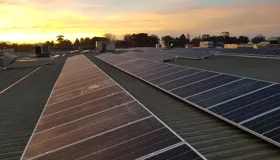
The investment builds on ongoing CEFC work with QIC to futureproof retail centres through using rooftop solar, energy-efficient lighting and advanced building management systems to lift energy performance and cut carbon emissions.
Previously, the CEFC was a cornerstone investor in the 2019 QIC green bond that financed initiatives to enhance the environmental performance of three major shopping centres.
The CEFC also has an equity investment in the QIC Town Centre Fund, which is targeting net zero emissions for its core assets by 2028.
OUR IMPACT
Tapping into savings potential
As Australia accelerates its transition towards a net zero economy, the nation’s shopping centres are a relatively untapped opportunity to transform energy use and reduce carbon emissions.
Shopping centres can have substantial energy needs, with their large floor spaces requiring considerable energy-intensive lighting and air conditioning. These centres are not static assets, undergoing frequent changes in tenancy, layout and operational hours, which can further complicate energy management. 1
Through its investment in QERF the CEFC is supporting the acceleration of energy efficiency, electrification and circularity at scale across the sector and as a value-add to commercial performance.
QREF has a target of net zero by 2028 for Scope 1 and 2 emissions, with onsite solar generation accounting for approximately 50 per cent of common area energy use.
A Smart Energy Hub strategy is being developed and implemented across the QERF portfolio to create flexible load capacity and grid interactivity. Market engagement and collaboration will be leveraged to progress decarbonisation efforts through the value chain.
1: NABERS: Spotlight on Shopping Centres