Charging towards cleaner public transport with Zenobē
Pilot project proves the benefits of electric buses
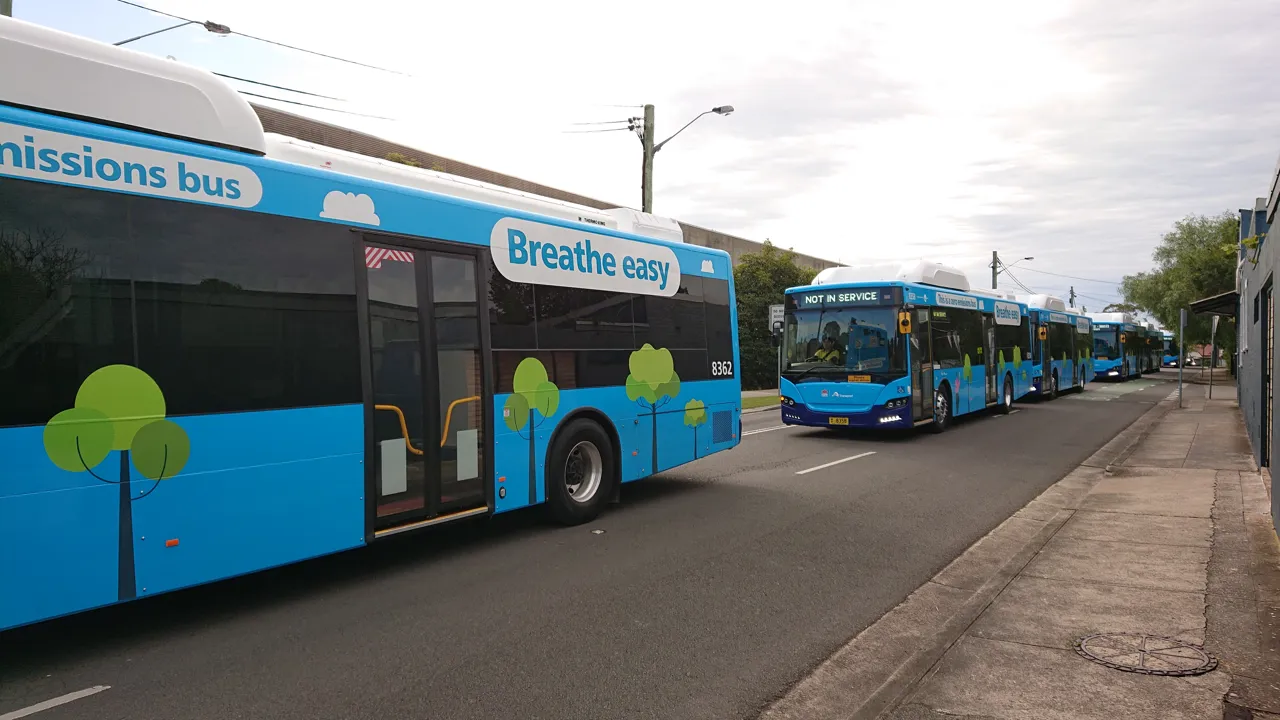
Zenobē and Transgrid, with CEFC backing, introduced 40 electric buses to the NSW fleet and introduced EV charging infrastructure for them at the Leichhardt bus depot in Sydney.
$24.5m
CEFC commitment
40
electric buses
3,700 tCO2-e
annual emissions reduction

Watch
Electric buses hit Sydney's streets
Australia’s first electrified bus fleet is transforming journeys across Sydney, using solar power generated from depot panels to charge buses overnight. A 40-strong electric fleet is servicing public bus routes in the city’s Inner West, CBD, Mascot and Green Square. With thanks to ARENA for the video.
Our investment
The CEFC helped finance Australia’s first electrified bus fleet, with a $24.5 million commitment that was used to replace 40 internal combustion engine buses in NSW with electric buses.
The CEFC commitment was repaid in June 2026. The pilot project was also supported by a $5 million grant from ARENA and $6.5 million in equity from Transgrid and Zenobē.
The CEFC finance enabled project counterparties Zenobē and Transgrid to own, operate and lease the electric buses and infrastructure to Transit Systems and Transport NSW.
The CEFC finance supported the introduction of Sydney’s first electrified bus fleet and demonstrated how charging infrastructure could be a managed service paid for through fuel and maintenance savings.
Separately, CEFC finance is supporting Zenobē to purchase battery electric trucks which are leased to Woolworths for last-mile grocery deliveries.
our impact
Transport, which accounts for 22 per cent of Australia’s greenhouse gas emissions1, is on track to be Australia’s largest emitting sector by 2030 unless action is taken.
Electric vehicles can reduce harmful emissions and lower reliance on fossil fuels, making them a valuable sector decarbonisation tool.
The CEFC works with project developers, industry and policy makers to advance innovative financing models that can accelerate the take up of electric vehicles across personal, light commercial, public and heavy vehicle transport.
Backing an electric bus blueprint
The CEFC debt finance was part of a $36 million project which retrofitted the Leichhardt depot to create Australia’s first fully integrated electric bus depot.
The NSW Government has pledged to electrify its 8,000-strong passenger bus fleet by 2030.
The project stimulated the development of more large-scale bus electrification projects in NSW by creating a blueprint for a next-generation electric bus depot that could seamlessly integrate vehicles, chargers, solar generation and batteries with the electricity grid.
The project also contributed to the reduction of noise pollution around the Leichhardt bus depot area and significantly reduced carbon emissions from the Sydney Region 6 bus fleet.2
The 40 electric buses are supported by 368 kWh and 422 kWh battery packs, fast charging infrastructure, 2.5 MW/4.9 MWh of stationary battery energy storage and 388 kWp of rooftop solar.
The project included the installation of a suite of infrastructure at a single site, combining charging equipment, battery storage, renewable energy and grid support services. Innovative software, including onboard telematics that provides critical vehicle data, helps manage the chargers, batteries, solar and grid input.
Zenobe reported that investment in the 40 electric buses was expected to abate 3,744 tCO2-e annually.3
By 2026 the buses originally purchased were being replaced by later models, with the original buses being released to a new operator, further unlocking access to the electric market for more participants.
1. Australian Government: Transport and Infrastructure Net Zero Roadmap and Action Plan, September 2025
2 ARENA: Next Generation Electric Bus Depot April 2026
3. Zenobē: Australia’s largest next generation electric bus depot October 2024