
Cleanaway targets cleaner ways to reduce waste sector emissions
Driving decarbonisation to advance Australia’s circular economy
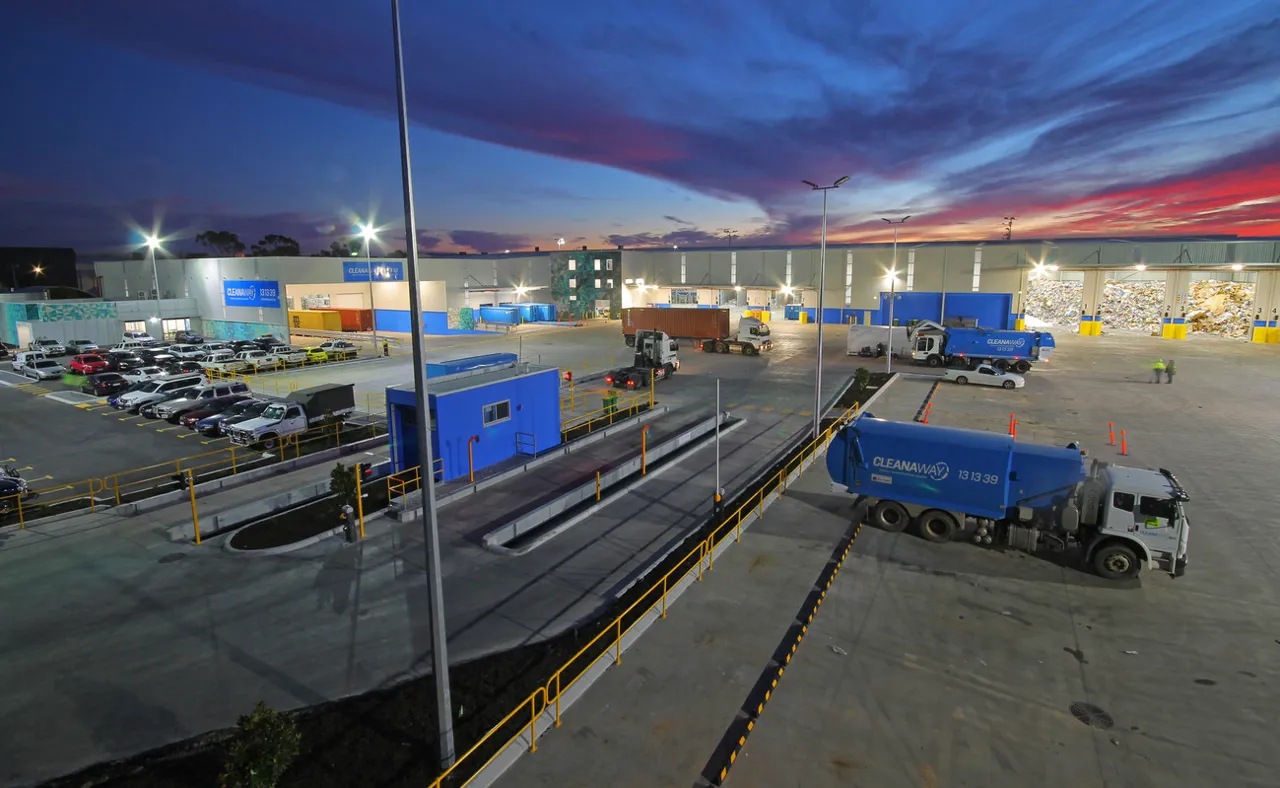
Australian waste management company Cleanaway is accelerating an ambitious program of landfill methane abatement, heavy fleet decarbonisation and circular economy infrastructure with finance from the CEFC.
$180 million
CEFC cumulative commitment
Driving
decarbonisation
Hard-to-abate
emissions targeted
This collaboration with the CEFC shows what’s possible when finance works hand in hand with our business operations. Together, we’re demonstrating that the waste sector can be a powerful force for decarbonisation and a cornerstone of Australia’s circular economy.Paul BinfieldCFO, Cleanaway
Our investment
The CEFC is supporting the waste sector through a cumulative investment commitment of $180 million to Cleanaway Waste Management, which backs a suite of ambitious initiatives that target hard-to-abate waste streams to drive measurable environmental and resource recovery outcomes across an integrated national system.
The CEFC committed $90 million at the end of 2025, refinancing its 2017 $90 million corporate loan, to continue to unlock high-impact projects and drive innovation across the waste industry.
The first phase in 2017 delivered:
- Annual emissions abatement of more than 100 ktCO2-e.
- A range of unique investments that increased resource recovery and recycling rates across Cleanaway’s national network.
- Behind-the-meter renewable energy capacity that reduces reliance on carbon-intensive grid electricity.
The latest commitment in late 2025 is supporting Cleanaway’s next stage of decarbonisation. The CEFC investment fast-tracks initiatives across three critical areas:
- Direct methane and landfill mitigation
- Decarbonising Cleanaway’s heavy vehicle fleet
- Circular economy infrastructure
OUR IMPACT
Australia’s waste sector, which is critical to Australia’s ability to meet its emissions reduction targets, faces unique challenges to successful decarbonisation. The waste sector is responsible for approximately three per cent of Australia’s emissions.1 Efforts to decarbonise and improve resource recovery have faced prolonged construction timeframes, high technical and operational risks, insufficient infrastructure and challenging economics.
The CEFC is committed to supporting efforts by the waste sector to decarbonise. Collaboration with Cleanaway recognises the market leader’s unique position to drive the decarbonisation of the waste sector as well as its own customers’ decarbonisation journey.
The CEFC increased commitment supports the next stage of decarbonisation for Cleanaway, fast-tracking initiatives including:
- Targeted gas capture: Designing and drilling specialised wells to expand methane collection infrastructure at landfills as well as cutting-edge methane detection technology integrated with drones.
- Resource conversion: Innovating to convert captured landfill gas into high-value commodities beyond electricity.
- Decarbonising Cleanaway’s heavy vehicle fleet: Testing low-carbon fuels and hydrogen propulsion systems as well as deploying electric-powered trucks for heavy-duty waste collection.
- FOGO expansion: Increasing capacity at the Eastern Creek Organics facility by 35 per cent to process food and garden organics.
- Advanced chemical recycling: Supporting the development of the Cycleback Plastics facility in partnership with Viva Energy to transform soft plastics into circular polypropylene identical to virgin resin.
- Progressing early-stage Energy from Waste (EfW) developments: To recover energy from residual waste.
- Education through Greenius: The market-leading online learning portal provides technical knowledge to improve recycling accuracy and reduce contamination at the source.
- Recycling Behaviours Reports: The reports identify critical gaps in recycling behaviours and infrastructure accessibility and enable Cleanaway to tailor its waste education strategy and drive systemic changes towards a sustainable circular economy.
Read more about the Greenius and the Recycling Behaviours Reports