Transforming food and garden organic waste into nutrient-rich compost
Circular economy solution reduces landfill and emissions
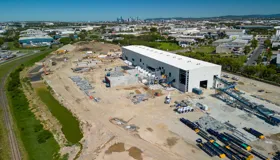
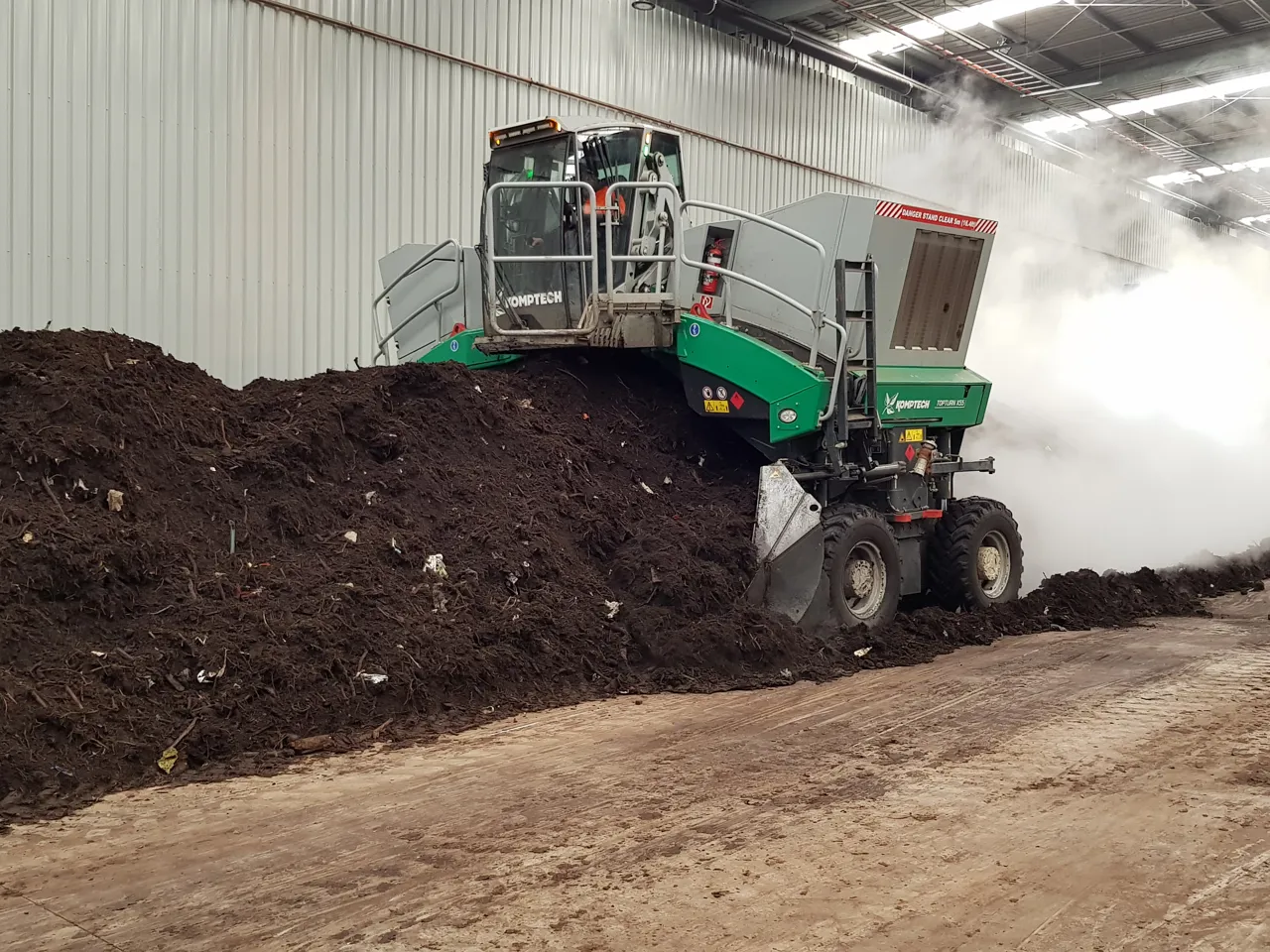
Melbourne’s South Eastern Organics Processing Facility, operated through Valoriza Environment Australia Pty Ltd and built by leading international waste management company Sacyr Group, uses a fully-enclosed in-vessel composting process to turn household organic waste and commercial food waste into a nutrient-rich compost.
$38m
CEFC commitment
~78,000
tCO2-e of net emissions abatement annually
~36,000t
of compost produced annually
Our investment
The CEFC committed $38 million in debt finance in 2018 to the development of the $65 million South Eastern Organics Processing Facility, in the Dandenong region of Melbourne.
The facility takes truckloads of household food and garden waste from various local councils, as well as food waste from commercial operators and converts it into nutrient-rich compost that is sold to landscaping, garden supply and agricultural businesses.
The plant is processing at least ~80,000 tonnes of organic material each year, to produce ~36,000 tonnes of compost. This process is estimated to abate ~78,000 tCO2-e annually. The plant has a nameplate capacity of 120,000 tonnes a year to produce ~50,000 tonnes of compost.
The facility was built and operated by leading international waste management company Sacyr Group. In October 2023 Sacyr completed the sale of its waste service business Valoriza Servicios Medioambientales (VSM) to Morgan Stanley Infrastructure Partners. Since the change in ownership, the Valoriza team has been focused on optimising the Victorian facility. The outstanding CEFC finance was repaid in June 2026 through an external bank refinance.
REPAID: June 2026
our impact
Each year organic waste in Australian landfills generates about 13 million tonnes of greenhouse gas emissions – approximately 2.5 per cent of the nation’s total emissions.1
The National Waste Policy Action Plan (2024) sets out to halve the amount of organic waste sent to landfill by 2030 and it commits Australian and state and territory governments to support the development of infrastructure to process organic waste.2
CEFC finance for the South Eastern Organics Processing Facility demonstrated a model for groups of councils considering investing in substantial waste management infrastructure to reduce landfill waste using proven technology and avoid landfill emissions.
The investment in the facility supported significant estimated emissions abatement over the facility’s lifetime. It also demonstrated the bankability of Waste Supply Agreement-based projects on a project finance basis.
The project has helped develop advanced waste industry skills in Australia and assisted in developing the requisite supply chain to deliver these types of projects.
1. DCCEEW, Recovering Organic Waste, September 2025
2. National Waste Policy and Action Plan, 2024