
Investors are shaping Australia’s changing energy future
This article first appeared in The Energy.
10 April 2026
By Ian Learmonth, CEO, Clean Energy Finance Corporation
Australia’s energy system is entering a defining phase. Volatility in global fuel markets underscores how closely domestic energy prices are linked to international events. More than 80 per cent1 of our refined fuels are sourced from overseas, at a cost of more than $50 billion a year.
The investment implication is clear: in a volatile world, resilience has a price, and it has a value. Climate-aligned private assets that support energy security and strengthen supply chains are not simply “sustainability” exposures; they are increasingly part of the economy’s resilience toolkit.
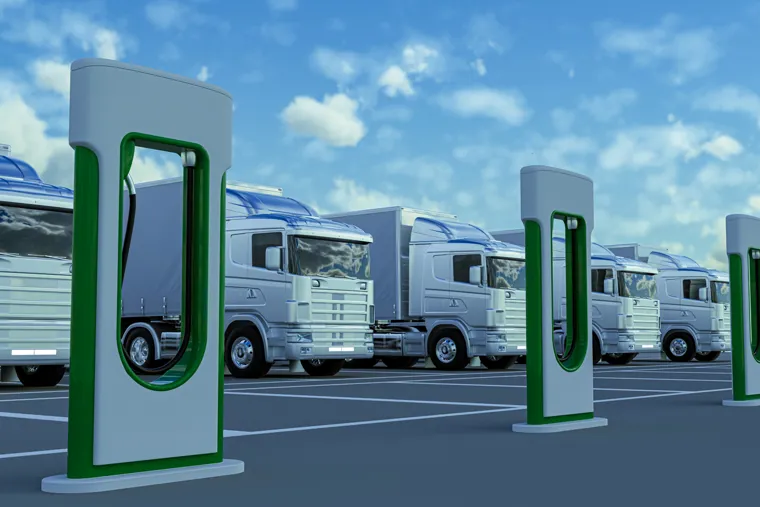
Since the war in Iran began, interest in electric cars and trucks, unexposed to the fuel crisis, has been off the charts. The question is no longer whether the transition will proceed - that is a given; it is how efficiently capital can be deployed through geopolitical uncertainty. The ‘security premium’ is now upon us.
That is where Clean Energy Finance Corporation (CEFC) comes in. Public capital such as ours can play a catalytic role - not by replacing private investment but by introducing structures that broaden participation, manage risk, provide liquidity and crowd in additional institutional capital over time.Ian LearmonthCEO, CEFC
Australia has already shown how quickly markets can evolve when capital, technology and demand align. We have the highest household solar uptake in the world, and the recent battery boom is reshaping how we use energy in the home. When the economics are compelling, markets scale, and access to capital is a decisive enabler.
Institutional interest is clearly present. Analysis by the Investor Group on Climate Change shows Australia’s largest asset owners and managers, overseeing around $4.2 trillion, report increasing interest in climate solutions, while the Responsible Investment Association Australasia estimates more than $1.6 trillion of assets are now managed under responsible investment approaches in Australia.2 But barriers remain, and the capital associated with that interest is not evenly deployable across sectors, project stages or through volatile cycles.
The binding constraint is not necessarily appetite, but access. Many climate-aligned private assets can be difficult to access without taking concentration and liquidity risk. In a world where resilience matters, concentrated exposure and liquidity can be structural barriers to participation at scale.
That is where Clean Energy Finance Corporation (CEFC) comes in. Public capital such as ours can play a catalytic role - not by replacing private investment but by introducing structures that broaden participation, manage risk, provide liquidity and crowd in additional institutional capital over time.
Since inception, the CEFC has delivered some $97 billion in total transaction value, building a practical understanding of where capital can unlock private investment, reduce risk and accelerate delivery.
In a market first this week the CEFC used a novel capital ‘recycling’ approach contributing up to $125 million in assets to Australian Ethical’s Growth Opportunities Fund. The $600 million vehicle provides a leading demonstration of this new institutional structure in action.
By transferring selected existing investments into a pooled vehicle, CEFC capital is freed for redeployment into new climate-aligned investments, while more investors gain access to established climate-aligned assets. That is the taxpayer “double dividend”: public capital works harder, while climate-aligned investment is broadened.
Recycling CEFC capital enables it to go further. It allows exposure to operating assets to be maintained while freeing capacity to finance the next wave of clean energy investments at a time when we need to accelerate them. It is a simple concept with significant implications: more investment capacity over time, and a pathway for more investors to participate in climate assets.
This innovation has broader implications beyond a single transaction. Public capital that is recycled continues to work. It does not sit idle once an asset is operational. It supports new projects, attracts additional private investment and extends the impact of each dollar.
As the transition to a low-carbon economy scales, structures that aggregate assets, provide liquidity and diversify exposure become more important. This matters because the scale of Australia’s energy transition is significant, and it will not be delivered by public or private capital alone. It requires both, working in ways that reinforce each other.
Australia has the resources, capability and capital to deliver an energy system that is more secure against global shocks, more reliable and better aligned with long-term economic growth.
For institutional investors, the opportunity is clear. In a world defined by unpredictable geopolitics, supply disruptions and volatile commodity markets, climate-aligned investment increasingly warrants consideration as a part of a core resilience allocation. The greater risk is remaining exposed to energy-driven volatility without holding the assets that help counter the challenge before us.
1 CEFC, Refined Ambitions – How Australia can become a low carbon liquid fuel powerhouse
2 IGCC, New Research: Australia’s 2025 State of Net Zero Investment Report


